How to Choose a Rotating Sit-to-Stand Bed
To choose a rotating sit-to-stand bed, compare weight capacity, rotation range and direction, width and height range, control type, room clearance, mattress, finish, and budget. Match those specs to the user's body size, room, and how much lift assist they need before ordering.
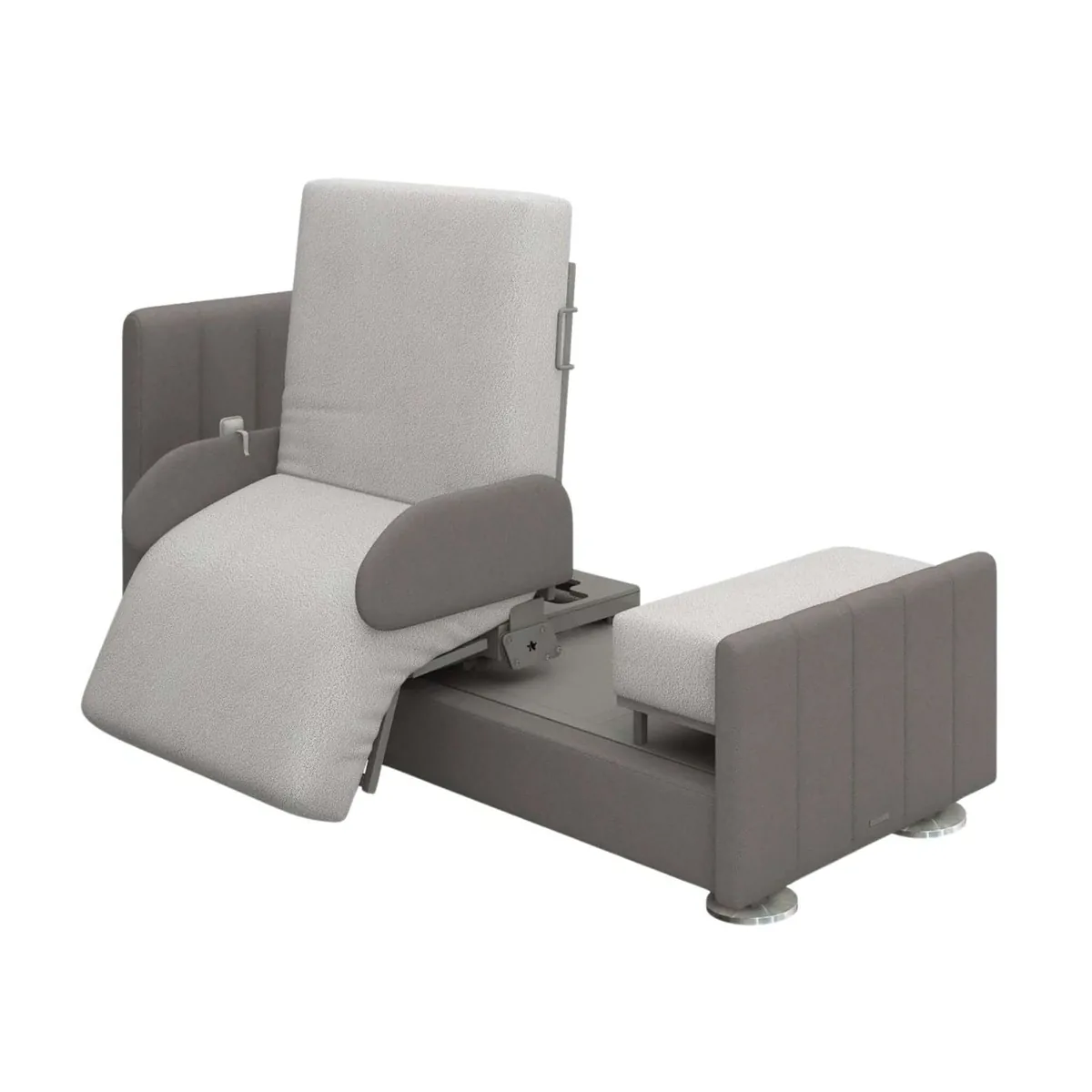
What is a rotating sit-to-stand bed?
A rotating sit-to-stand bed is a motorized homecare bed that turns the sleeping surface toward the side of the bed and lifts it, moving the user from lying down to a seated or near-standing position at the push of a button. Instead of pulling yourself up and pivoting your legs over the edge, the bed does the rotation and elevation for you. This category overlaps with hospital beds and lift chairs but adds powered bed-to-chair rotation.
RotatingBeds.com is a US retailer specializing exclusively in these beds, with delivery and professional in-home installation nationwide by certified technicians, typically in 4 to 11 days. This article is general buying guidance, not medical advice; consult a clinician about a specific condition or mobility need.
Which specs should you compare first?
Start with the factors that determine whether a bed will physically work for the user and the room:
- Weight capacity — the user's weight must sit comfortably under the rated limit.
- Rotation range and direction — how far the surface turns, and whether it rotates left, right, or either way.
- Height range — low enough for safe transfers, high enough for caregivers.
- Controls — handset operation and the number of independent motors.
- Room clearance — space for the surface to rotate out and for a caregiver to stand.
- Mattress, finish, and budget — comfort, look, and what you can spend, including financing.
How much weight capacity do you need?
Weight capacity is the safe working limit for the user plus anything on the surface. Choose a rating with headroom above the user's weight rather than one they sit right at the edge of. Across these four beds, capacity ranges from 450 lb to 600 lb. The Arlo is rated to 450 lb; the UPbed Independence to 500 lb; and both Med-Mizer ActiveCare models — the ActiveCare and the ActiveCare Deluxe — to 600 lb. If the user is heavier or you want extra margin, the higher-capacity models give more room. Pair the right capacity with a payment plan through financing if budget is a factor.
How do rotation range and direction matter?
Rotation is what makes these beds distinct: the surface turns toward the bedside so the user faces out, ready to stand. Direction matters because the bed should rotate toward the side of the room with open floor and toward the user's stronger side. The Arlo offers 90-degree rotation to the left or right. The UPbed Independence rotates 90 degrees in either direction. Both Med-Mizer ActiveCare models use patented SafeTurn powered bed-to-chair rotation, available right- or left-hand, with the Deluxe adding RollBack technology that reduces shearing as the head section rises. Confirm the room layout supports your chosen rotation direction before ordering.
What about height range, controls, and room clearance?
Height range affects both safe transfers and caregiver comfort. The Med-Mizer ActiveCare models adjust from 19.5 to 34.5 inches, with an 80-degree backrest and optional Trendelenburg / reverse Trendelenburg positioning. The Arlo sits at roughly 23 inches mattress height, with head elevation to about 90 degrees and leg elevation to about 35 degrees. For controls, the UPbed Independence runs two silent independent motors and adds two USB outlets plus a motion-activated under-bed light. For clearance, leave space on the rotation side for the surface to swing out and for a caregiver to stand and assist.
Which mattress and finish should you pick?
The mattress affects everyday comfort and pressure management. The UPbed Independence includes a 7-inch homecare memory-foam mattress and also works as a bed, a rotating chair-bed, and a lift assist. The ActiveCare Deluxe offers an optional alternating-pressure low-air-loss mattress along with furniture-grade upholstered headboards for a more residential look. If the bed sits in a shared living space, finish and appearance may carry more weight; if it is purely functional, prioritize the mattress and mechanics.
How do the four beds compare?
| Bed | Brand | Weight capacity | Notable feature | Price from |
|---|---|---|---|---|
| Arlo Sit to Stand | Arlo | 450 lb | 90° rotation left or right | $4,299 |
| UPbed Independence 4-in-1 | UPbed | 500 lb | Two silent motors; works as bed, chair-bed, lift assist | $3,999 |
| Med-Mizer ActiveCare | MED-MIZER | 600 lb | Patented SafeTurn bed-to-chair rotation | $3,877 |
| Med-Mizer ActiveCare Deluxe | MED-MIZER | 600 lb | SafeTurn + RollBack; upholstered headboards | $12,787 |
How do budget and financing fit in?
Prices here start at $3,877 for the Med-Mizer ActiveCare and reach $12,787 for the top-of-line ActiveCare Deluxe. If the up-front cost is a hurdle, financing is available to spread payments. Every order includes free lifetime in-home tech support and a Lowest Price Guarantee — we'll beat any verified quote from an authorized U.S. seller. For help matching a bed to your room, body size, and needs, see our buying guides, review delivery and installation details, or contact us at 888-912-2746.
Last updated: June 2026
Not sure which bed is right?
Our home medical bed specialists help families choose the safest, best-value bed every day. Free consultation, no pressure.