How Rotating Sit-to-Stand Beds Work
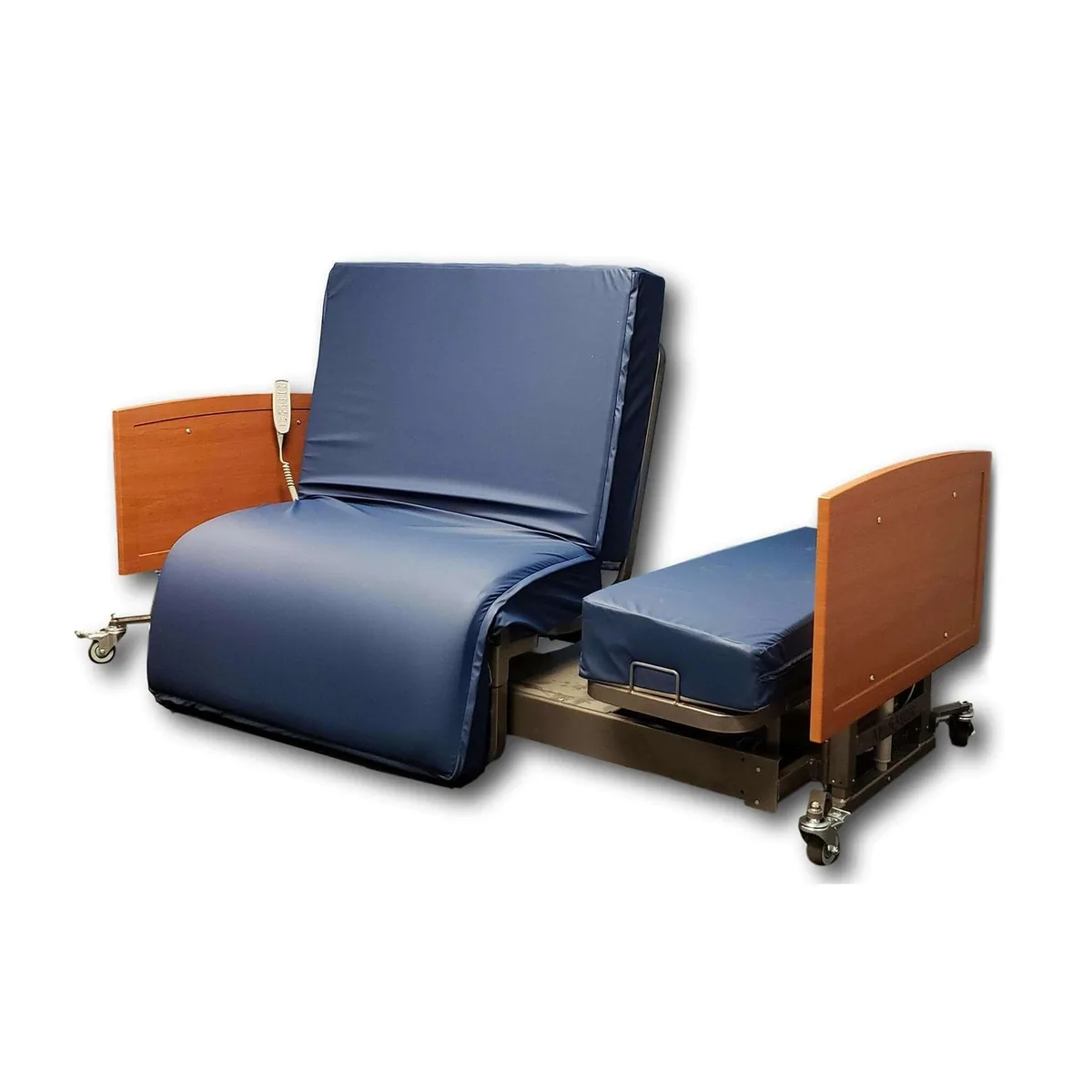
A rotating sit-to-stand bed is a motorized homecare hospital bed that turns the sleeping surface toward the side of the bed and lifts it, moving the user from lying flat to a seated or near-standing position at the push of a button on a handheld remote, then reverses to lie back down.
What is a rotating sit-to-stand bed?
A rotating sit-to-stand bed is a motorized homecare hospital bed designed to help a user move between lying down and standing without lifting or transferring across furniture. Instead of staying flat like a standard adjustable bed, the sleeping surface rotates 90 degrees toward the side of the bed and rises, so the user ends up seated on the edge or near a standing position. From there, the same motion runs in reverse to lie back down.
These beds combine three things in one frame: a comfortable bed, a powered rotation mechanism, and a lift function. Models like the UPbed Independence describe this as a 4-in-1 design, working as a bed, a rotating chair-bed, and a lift assist. This is general buying guidance, not medical advice — consult a clinician about your specific needs.
How does the rotation work?
The core motion is powered rotation paired with elevation. When activated, motors turn the mattress platform sideways — typically 90 degrees, to the left or to the right depending on the model and which side of the bed the user exits — while raising it. This pivots the user from lying parallel with the bed to facing outward with feet toward the floor, reducing the twisting and pulling that a manual transfer can involve.
Rotation direction is usually selectable. The Arlo offers 90 degree rotation to the left or right, and the Med-Mizer ActiveCare uses patented SafeTurn powered bed-to-chair rotation configured for right-hand or left-hand use. Because the surface itself moves the user, caregivers do not have to bear the full load of a manual lift.
What is SafeTurn and RollBack?
SafeTurn is Med-Mizer's name for its patented powered bed-to-chair rotation, available on the ActiveCare and ActiveCare Deluxe. It drives the controlled turn from a flat sleeping position to a seated chair position, and can be set up for right- or left-hand operation to suit the room and the user.
RollBack is an added technology on the top-of-line ActiveCare Deluxe. It is designed to reduce shearing as the head section rises — meaning the surface adjusts so the body moves with the backrest rather than sliding against it during elevation. The Deluxe pairs SafeTurn and RollBack with furniture-grade upholstered headboards and optional features such as Trendelenburg positioning and an alternating-pressure low-air-loss mattress.
How does the handheld remote control it?
Every function is driven from a handheld remote. Buttons trigger the powered motions: rotate to sit or stand, return to lying flat, and the standard adjustable positions. The motors are designed to run smoothly and quietly — the UPbed Independence, for example, uses two silent independent motors so the back and legs can adjust separately.
Holding a button runs the motion; releasing it stops. To lie back down, the user reverses the sequence with the remote, lowering and rotating the surface back to a flat sleeping position. Some models add convenience features around the remote — the UPbed includes two USB outlets and a motion-activated under-bed light, useful for nighttime use.
What standard adjustable functions are included?
Beyond rotation and lift, these beds offer the adjustable functions you would expect from a quality homecare bed. Head and leg elevation let the user sit up to read or eat and raise the legs for comfort — the Arlo provides head elevation around 90 degrees and leg elevation around 35 degrees. Height adjustment matters too: the Med-Mizer ActiveCare adjusts from 19.5 to 34.5 inches, with an 80 degree backrest.
Weight capacity varies by model, from 450 pounds on the Arlo up to 600 pounds on the Med-Mizer beds. Optional positioning such as Trendelenburg and reverse Trendelenburg is available on the ActiveCare models. Compare specifications across all four beds in our guides to match capacity, height range, and rotation to your situation.
Is it hard to operate?
No. The whole point of the design is push-button simplicity: the powered motions do the work, so operating the bed is a matter of pressing and holding the right button on the remote. Because the surface lifts and rotates the user, there is far less physical effort for the person in the bed and for any caregiver compared with a manual transfer.
You do not have to assemble or configure anything yourself. Delivery and professional in-home installation are handled nationwide by certified technicians, typically within 4 to 11 days, and they set the bed up and show you how it works. Every order also includes free lifetime in-home tech support, so help is available whenever you need it.
What should I expect with delivery and setup?
After ordering, certified technicians deliver and install the bed in your home, position it, and walk you through the remote and each function. You can learn more about timing and the process on our delivery page. Pricing is backed by a Lowest Price Guarantee — we'll beat any verified quote from an authorized U.S. seller — and financing is available.
If you are unsure which model fits your space, weight requirements, or rotation direction, our team can help you choose. Reach us at 888-912-2746 or through the contact page. Remember, this article is general buying guidance, not medical advice; talk to a clinician about your specific health and mobility needs before deciding.
Last updated: June 2026
Not sure which bed is right?
Our home medical bed specialists help families choose the safest, best-value bed every day. Free consultation, no pressure.